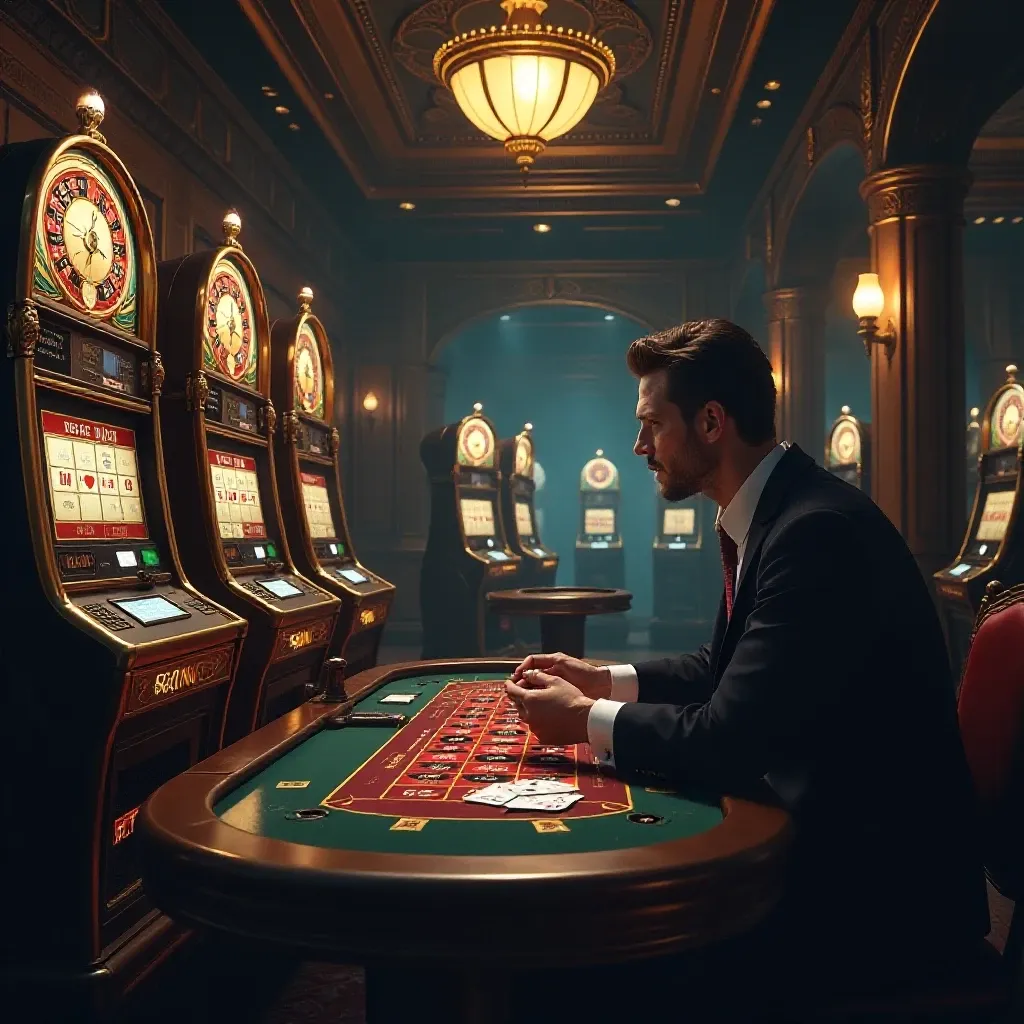
The flashing lights, the spinning wheels, the tantalizing promise of instant fortune – we’ve all been captivated by games of chance at some point. Perhaps you know someone who bought a lottery ticket with the wild fantasy of early retirement dancing in their head, or maybe you’ve felt the pull of a slot machine, whispering promises of untold wealth with each pull. While the allure of winning plays on our inherent desire for financial security, it’s crucial to understand the underlying probabilities and approach such pursuits with a clear head, since becoming rich by pure fortune is often a chimera and not a probability.
This isn’t about crushing dreams; it’s about grounding them. This exploration isn’t designed to discourage responsible enjoyment of games of chance, but to offer a balanced perspective, to examine the odds, and to highlight alternative paths to building lasting financial well-being with different options. Let’s explore the world of chance, understand its mathematics, and, more importantly, discover how you can take control of your financial future with smart choices and the right tools.
The Psychology of Chance
Games of chance possess an allure that extends far beyond simple entertainment. The draw lies deep within the human psyche, fueled by a complex interplay of neurochemical responses and cognitive biases that often override logical reasoning. The promise of reward, however improbable, triggers the release of dopamine, the brain’s pleasure chemical, creating a euphoric sensation that reinforces the desire to play, and play again. This neurological effect is particularly pronounced in situations where outcomes are uncertain, heightening anticipation and excitement.
Near misses, those frustratingly close calls, further amplify this effect. Instead of recognizing them as random occurrences, the brain interprets them as evidence that a win is imminent, creating a false sense of progress. Consider a person whose near miss makes them believe that their win rate is higher than it truly is. This irrational thought process is a hallmark of the gambler’s fallacy, the mistaken belief that past events influence future independent outcomes. Statistics consistently demonstrate the prevalence of such cognitive distortions. Studies reveal that a substantial percentage of regular game players believe they possess a superior understanding of probability, despite demonstrable evidence to the contrary. This overconfidence, coupled with the neurological rewards, creates a powerful incentive to continue playing, even in the face of mounting losses.
The Illusion of Control
A potent cognitive bias that significantly impacts behavior in games of chance is the “illusion of control.” This is people’s tendency to believe they have more influence over random events than they actually do. This bias is evident in lottery players who meticulously choose their numbers, falsely believing that this increases their odds of winning. Similarly, at casinos, gamblers may develop elaborate rituals or superstitions, convinced that these actions somehow sway the roulette wheel or influence the cards dealt. Despite the inherent randomness of these games, people cling to the belief that they can exert some degree of control, however illusory.
Loss Aversion and the Sunk Cost Fallacy
Two additional psychological factors that contribute to continued engagement in games of chance are loss aversion and the sunk cost fallacy. Loss aversion describes the tendency for people to feel the pain of a loss more strongly than the pleasure of an equivalent gain, so people keep playing to not feel that pain. Let’s say someone has already lost a large amount of money. The sunk cost fallacy kicks in: the gambler feels compelled to continue playing to recoup their losses because they have already invested so much. This creates a dangerous cycle where people rationalize continued investment, desperately hoping to break even, even in the face of increasingly unfavorable odds, rather than cut their losses and walk away.
Common Pitfalls and Misconceptions
Games of chance, while potentially entertaining, are surrounded by myths and misconceptions that can lead to problematic behavior and unrealistic expectations. One of the most pervasive is the gambler’s fallacy, the mistaken belief that past events influence independent random events. For example, believing that after a series of coin flips landing on heads, tails is somehow ‘due’ to appear. Each flip is independent; the odds are still 50/50. No matter how many times a number hasn’t been drawn in a lottery, its chances of being drawn next remain the same as any other number.
Another common misconception involves “hot streaks.” People may believe in periods of increased luck or skill. While winning streaks happen, they’re simply statistical anomalies within random distributions. Attributing them to personal ability or fate is a recipe for disaster. The belief that certain numbers are ‘due’ is akin to believing a roulette wheel has a memory. Every spin is independent. Players who base their decisions on these fallacies often deviate from sound strategy and responsible gaming practices, leading to avoidable losses.
Countless stories exist of individuals who have fallen prey to these myths. Imagine a person convinced that a particular slot machine is ‘ready to pay out’ after observing others losing money. They invest heavily, chasing the illusion of an impending jackpot. In reality, the machine operates randomly, and their increased investment only amplifies their potential losses. This illustrates the danger of letting superstition override logic.
The House Always Wins: Understanding the Math
The house edge is a fundamental concept in games of chance. Also known as return to player (RTP), it represents the advantage the gaming operator has on every bet placed. A game with a 5% house edge means, on average, the operator expects to retain 5% of all wagers over the long run. Different games have varying house edges. For instance, classic blackjack, when played with optimal strategy, might have a house edge below 1%, while some slot machines can have house edges ranging from 5% to 10% or even higher. Understanding these probabilities is vital. Always remember that even games with relatively low house edges favor the house over time.
Chasing Losses: A Dangerous Spiral
Chasing losses, the act of increasing bets to recover previously lost money, is a perilous trap. Fueled by emotion and desperation, it disregards logical risk assessment. The desire to recoup losses can override sound judgment, leading to increasingly larger bets and potentially devastating financial consequences. Impulse control erodes leaving the player vulnerable. The reality is that each bet is a new, independent event, and past losses have no bearing on future outcomes.
Consider a person who loses a set amount at a poker table. Instead of walking away, they decide to double their stakes, convinced that a win will erase their losses. This approach is risky. If they lose again, their losses instantly double. Setting firm limits before engaging in any game and adhering to them, regardless of short-term outcomes, is crucial for responsible gaming. Do not let emotions dictate the next move.

Understanding the Odds
The allure of games of chance often overshadows the stark reality of probability. Understanding the underlying mathematics is crucial to appreciating the true nature of risk and randomness involved. While the dream of instant wealth or a thrilling win is captivating, a grasp of the odds provides a necessary dose of realism.
Odds represent the ratio of the probability of an event occurring versus it not occurring. They are often expressed as a fraction or a ratio, revealing the statistical likelihood of success or failure. In games of chance, these odds are meticulously calculated to ensure the house maintains a statistical advantage over time. This doesn’t eliminate the possibility of winning, but it strongly suggests it’s more about chance than strategy.
For example, consider a simple coin flip. The odds of getting heads are 1:1, meaning there’s an equal chance of landing on heads or tails. However, games of chance are rarely this straightforward. The more complex the game, the more astronomical the odds become, and the harder it is to win.
Lotteries: A Numbers Game
The lottery presents a striking example of how overwhelming odds can be. The promise of a life-changing jackpot lures countless players but winning requires matching a specific set of numbers. The odds depend on the number pool and how many numbers you must match. Often, the number of possible combinations quickly escalates into the millions, even hundreds of millions. To put it in perspective, you are more likely to be struck by lightning than win the lottery.
Casino Games: A Calculated Risk
Casino games present a different set of probabilities. Games like blackjack, roulette, and slot machines each have their own set of odds and house edges. Blackjack, while having an element of strategy, still favors the house, albeit less than some other games. Roulette offers various betting options, but the presence of the zero (and sometimes a double zero) tilts the odds in the casino’s favor. Slot machines are notorious for their high house edge, with payouts determined by random number generators making it almost impossible to predict the outcome. Understanding the house edge—the percentage of each bet the casino expects to keep—is vital for risk assessment. While skill can mitigate risk in games like poker, Lady Luck remains a dominant factor in any casino.
Responsible Gaming
Navigating the world of online gaming and casinos requires a strong sense of responsibility. While the thrill of potential wins can be exciting, it’s important to approach gambling with caution and awareness. A significant portion of the population grapples with gambling-related issues, ranging from unhealthy habits to full-blown addiction. Responsible gambling isn’t about eliminating the fun; it’s about ensuring that gambling remains a source of entertainment, not a source of stress or financial ruin. Cultivating self-control and understanding the risks are key to enjoying a safe and sustainable gaming experience. Responsible gaming includes the usage of limits and resources.
Setting Limits and Sticking to Them
Before diving into the world of online casinos, establish clear boundaries for both your spending and time. Treat gambling as a form of entertainment with a predefined budget, not as an investment strategy. For example, allocate a specific amount—say, $50 or $100 per week—that you’re comfortable losing. Then, divide your time into sessions, such as two hours in the evening. Sticking to these limits requires discipline, but it’s crucial for maintaining control. Did you know that studies show individuals who set a budget before gambling are 5 times more likely to stick to them? Consider keeping a journal to track your wins and losses. This provides a clear picture of your gambling habits and can help you stay within your limits.
Recognizing Problem Gambling
Identifying the signs of problem gambling is the first step toward seeking help. Some common indicators include: chasing losses, gambling with money meant for essential expenses, feeling restless or irritable when not gambling, lying about your gambling habits, and neglecting responsibilities due to gambling. If you recognize these signs in yourself or someone you know, it’s important to seek help. Several organizations offer support and resources for problem gamblers. The National Council on Problem Gambling provides a wealth of information and a helpline for those in need. Remember, acknowledging the problem is a sign of strength, and help is readily available.
Building Wealth Beyond the Spin
Chasing fleeting trends and get-rich-quick schemes might offer a temporary thrill, but lasting wealth is built on a foundation of proven strategies. It’s about playing the long game, not just reacting to the latest market buzz. A solid financial plan involves a diversified approach to investing, encompassing assets like stocks, bonds, and even real estate. These aren’t just abstract concepts; they’re the building blocks of a secure future. Think of it like this: spreading your resources across different areas protects you from the sharp downturns in any single market. It’s like having multiple streams of income instead of relying on just one.
Consider the story of Sarah, a teacher who started investing early. She didn’t have a massive income, but she consistently put a portion of her salary into a mix of stocks and bonds. Over thirty years, her initial investments blossomed, thanks to the power of compounding and diversification. By the time she retired, Sarah had accumulated a comfortable nest egg, proving that steady, informed action beats speculative gambles every time. Don’t underestimate the importance of getting professional guidance. A qualified financial advisor can help you create a personalized plan tailored to your specific goals and risk tolerance.
Case Study: The Impact of Early Investing
Two individuals, Alex and Ben, both start their careers at age 25. Alex begins investing $500 per month immediately, while Ben waits until age 35 to start investing $1,000 per month. Assuming an average annual return of 7%, by age 65, Alex will have accumulated approximately $1,570,000, whereas Ben will have approximately $980,000. Despite investing more each month, Ben ends up with significantly less due to missing out on the crucial first ten years of compounding.
Investing for the Future
Smart investment strategies hinge on diversification. A well-rounded portfolio minimizes risk and maximizes potential returns. As you age, your portfolio should adapt. Younger investors can often tolerate higher-risk investments like stocks, while those nearing retirement might shift towards more conservative options like bonds. Retirement planning shouldn’t be an afterthought. Start early, calculate your needs, and consistently contribute to retirement accounts.
The Power of Compound Interest
Compound interest is essentially “interest on interest.” When you earn interest, that interest then earns its own interest, creating a snowball effect over time. The formula to understand this better is: A = P (1 + r/n)^(nt). ‘A’ is the future value of the investment/loan, including interest, ‘P’ is the principal investment amount (the initial deposit or loan amount), ‘r’ is the annual interest rate (as a decimal), ‘n’ is the number of times that interest is compounded per year, and ‘t’ is the number of years the money is invested or borrowed for. Let’s say you invest $1,000 with a 5% annual interest rate, compounded annually, for 20 years. After 20 years, your investment would grow to approximately $2,653.30.
The Entertainment Value Perspective
Gaming, often viewed through a narrow lens of competition and potential reward, should be acknowledged as a source of fun and social connection. When practiced responsibly, gaming transforms into a valuable form of recreation, offering moments of joy and excitement. In my experience, the most fulfilling gaming experiences arise not from the pursuit of virtual wealth, but from the simple pleasure of shared moments and laughter with friends.
Responsible entertainment means setting clear boundaries and prioritizing real-life responsibilities. It’s about making conscious choices to ensure that gaming remains a leisure activity that enhances your life, rather than consuming it. By reframing our perspective, we can appreciate gaming’s lighter side, cherishing the memories created and the bonds strengthened through collaborative adventures.
Gaming as a Social Activity
The social aspect of gaming is very important. Playing games with friends and family creates shared experiences and teamwork. Building virtual communities encourages players to connect, support each other, and celebrate wins together. I would suggest setting a good example by organizing gaming nights at home. This should be viewed as social events where fun and interaction are more important than individual performance.
Finding Other Hobbies and Interests
Balancing gaming with other hobbies is also great. Exploring sports, arts, or outdoor activities should be considered in your free time. Having various recreational activities helps to create a balanced lifestyle, where gaming is just one part of a more fulfilling life. Different interests also help in people management because you can apply similar dynamics from your hobbies to your daily life.
Conclusion
In conclusion, while the allure of striking it rich can be strong, it’s essential to approach games of chance with a clear understanding of the risks involved. Responsible gaming hinges on setting realistic expectations, understanding the odds, and approaching these activities as entertainment rather than a path to financial windfall.
Effective financial planning involves making informed choices about resource allocation. Embrace a balanced approach, safeguarding your financial future. By prioritizing long-term financial well-being, you ensure that games of chance remain a source of entertainment rather than a source of potential instability. Your financial health is in your hands; make choices that reflect foresight and prudence.